

Water Tank and Supply Water Analysis
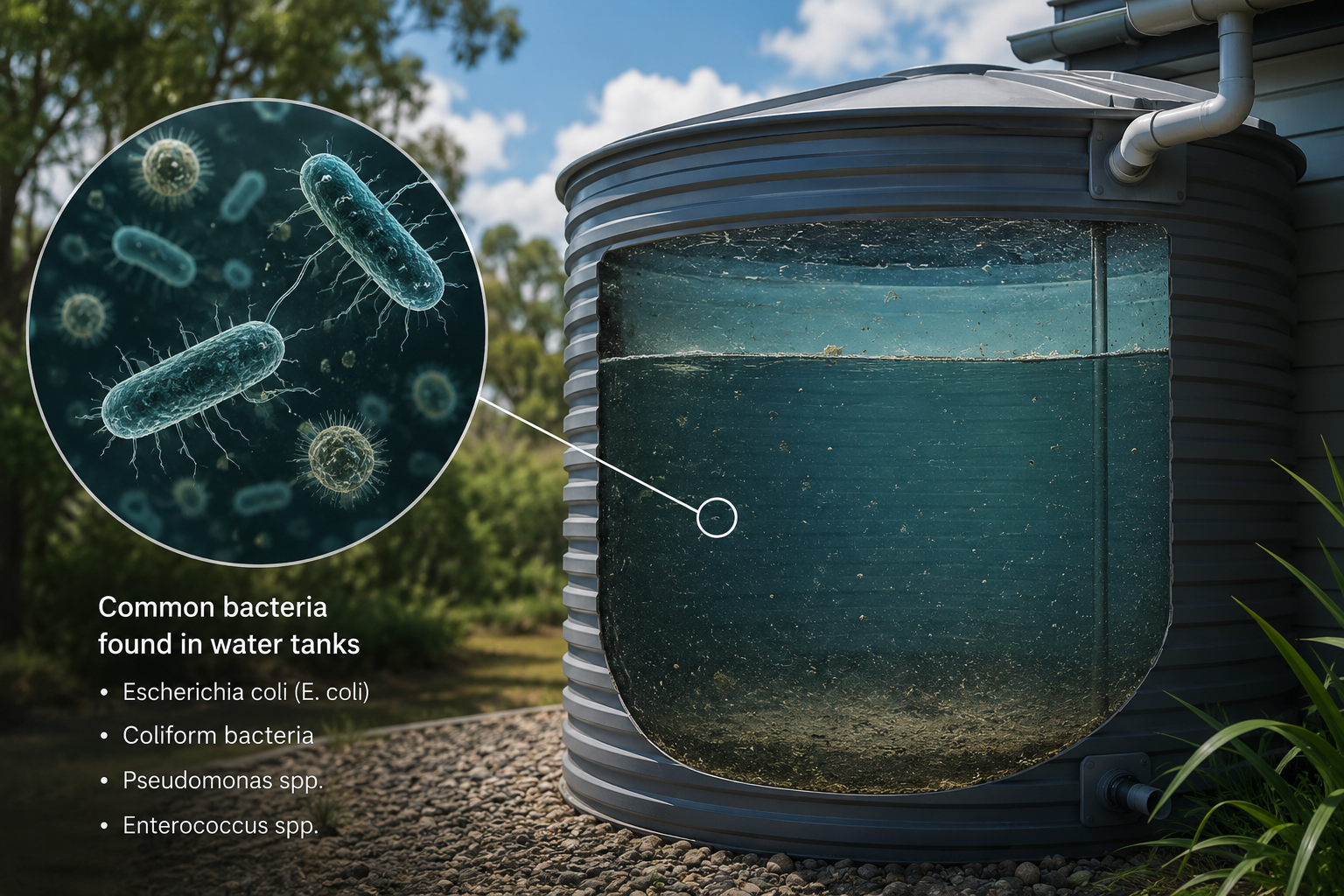
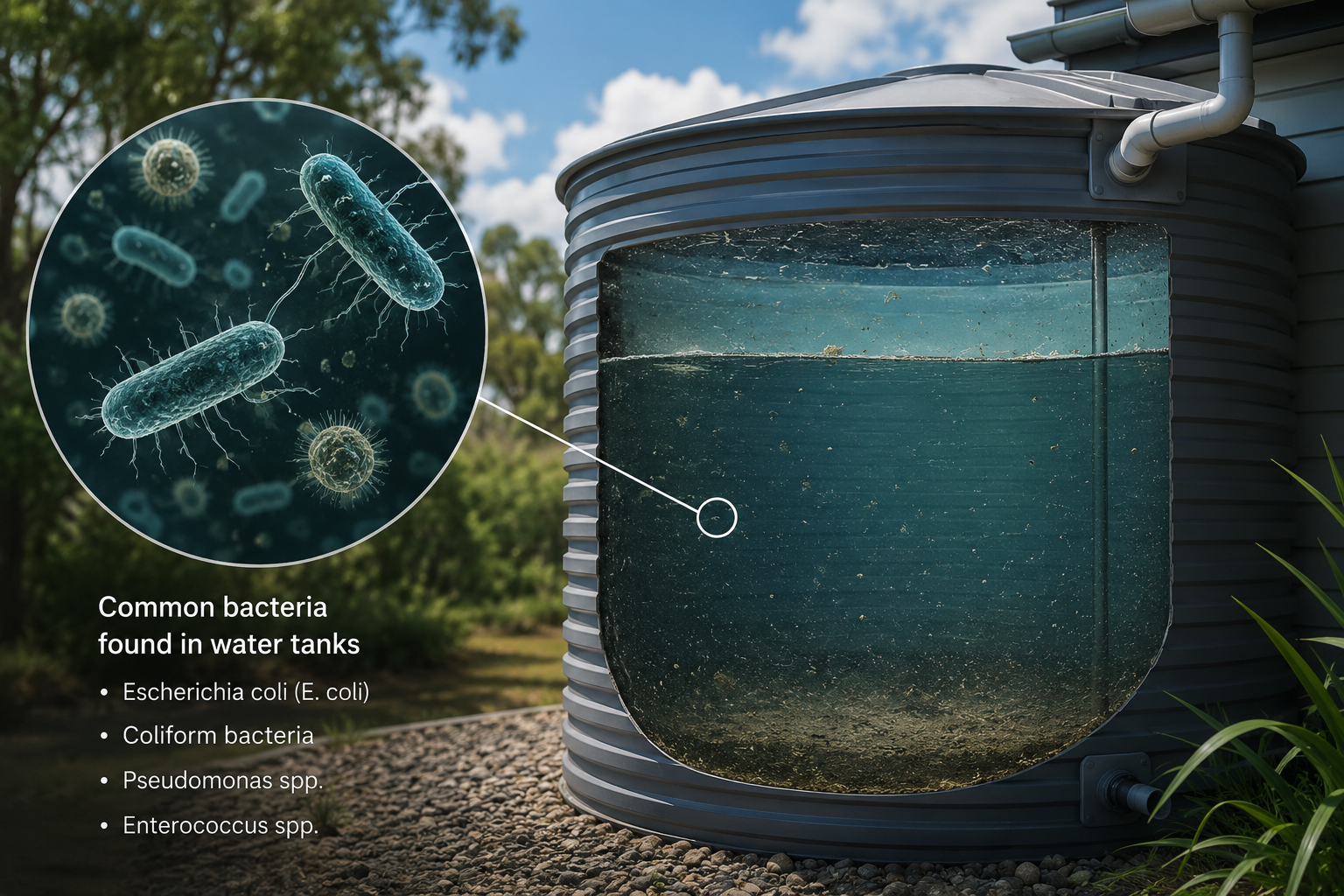
Rainwater tanks are often assumed to provide clean, natural water — but without proper testing, hidden contamination can go unnoticed for years. Our tank water sampling service is designed to identify harmful bacteria, sediment build-up, and emerging contaminants such as microplastics that may impact the safety and quality of your water supply.
Bacteria can enter tanks through bird droppings, decaying organic matter, insects, vermin, damaged tank lids, or poorly maintained gutters. Research from organisations including the World Health Organization and Australian water authorities has shown that untreated rainwater systems can contain harmful bacteria such as E. coli and coliforms, which may lead to gastrointestinal illness, skin irritation, or ongoing water quality issues — particularly in rural households relying on tank water for drinking, cooking, or bathing.
Microplastics are another growing concern. These tiny plastic particles can enter rainwater systems from roofing materials, degraded pipework, airborne pollution, and household plastic exposure. While invisible to the naked eye, studies increasingly suggest that long-term exposure to microplastics may affect both human health and water system performance. In many cases, homeowners are completely unaware these contaminants are present.
Our sampling process provides a clear understanding of what is actually in your water. Following testing, clients receive a detailed, easy-to-understand report outlining the results and what it means. We clearly explain any detected contaminants, what they may mean for your household or property, and the potential risks associated with them. Where issues are identified, we also provide practical recommendations and possible corrective actions, such as filtration improvements, tank cleaning, maintenance requirements, or further investigation if necessary.
Whether your tank services a family home, rural property, livestock operation, or business, regular testing is one of the most important steps in protecting both your water quality and long-term health.